Imagine standing at the crossroads of human insight and technological innovation – this was the heart of my recent virtual webinar at the National Council of Supervisors Summit. Picture a diverse group of educators and leaders, all gathered to untangle a critical conundrum: How do we leverage the efficiency of AI with the depth of our human experiences to enrich mathematics? This session wasn't just another discussion. It was a cautious foray into the essence of Authentic Intelligence in STEM - and we jumped in with cautious optimism. In this article let's go beyond the buzz and the hype, to uncover some possibilities for humanity and technology could redefine the future of STEM learning.
AI uses algorithms to search and analyze language databases and networks and image banks to return countless results from carefully constructed prompts. Platforms like ChatGPT are common as well as a host of now-integrated capabilities built into applications. One powerful role for AI in designing STEM experiences is in its capacity for 'crowd-gathering' ways in which a concept (e.g think parabolas, or rigid transformations) might be relevant and interesting (e.g think a group of 8th graders in a urban city). The ability to create and explore contexts that open up new 'worlds' of exploration and engagement for young learners is one of the top three pressing challenges in STEM.
AI holds our knowledge - AND our biases and our history [and present] of inequity.
Just like in the animated movie series, How to Train Your Dragon, unleashing the power of AI into STEM classrooms and camps comes with important groundwork. Training AI isn’t just about feeding it data; it's about embedding it with diverse experiences and perspectives. How do we achieve this? First, we give the AI context and a framework for thinking about specific areas. Then, we draft prompts that challenge the AI to think beyond algorithms – to consider ethical, cultural, emotional and liberatory dimensions. Rarely does AI capture the nuances of authentic intelligence on the first attempt. This journey of refining AI means moving beyond a mere tool of efficiency to activity capable of applying empathy and critical consciousness of societal issues into its activity.
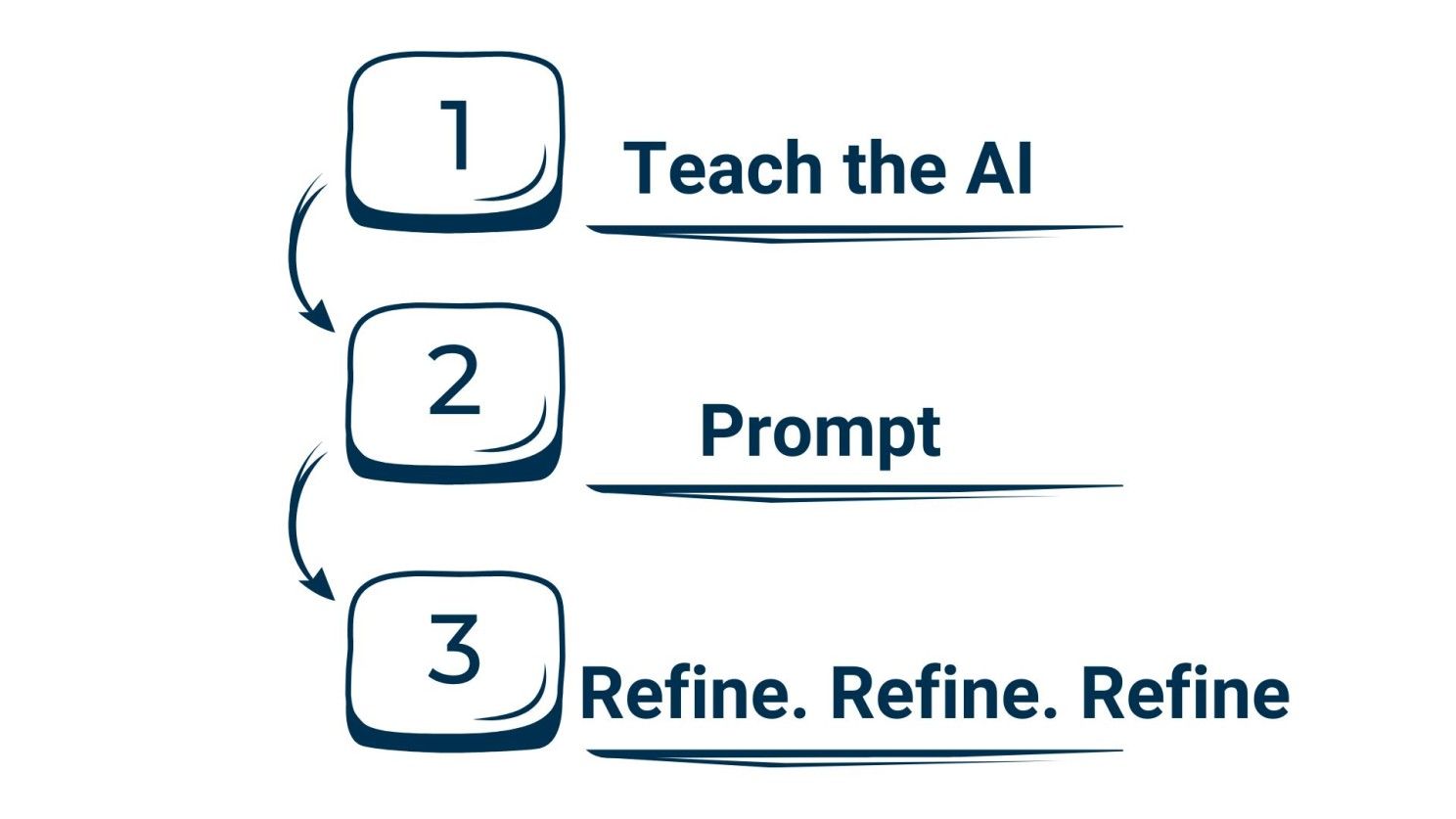
Here is what to consider:
Don't: Avoid deficit terms In training AI, like "at-risk" or "disadvantaged" which can unintentionally focus on limitations rather than strengths and potential.
Do This Instead: Ask, "What strategies illuminate the strengths and aspirations of [community]? This encourages AI to consider empowering and constructive responses.
- Create a hands-on environmental science project incorporating local ecological data and community impact for [insert grade and location].
- Outline an innovative technology lesson plan that includes ethical discussions on AI’s impact in society
- Develop a practical engineering challenge for[insert grade]that encourages students to solve real-world problems in communities like [insert community location or context].
- Suggest an interactive problem solving math activity for [insert grade] that involves a context that can be explored through storytelling or cultural history exploration of [insert community or cultural context].
- Design a cross-curricular project where students use AI tools to research and present on global health issues related to [insert health issue or community context].